Bite Correction That Stops the Wear
Teeth wearing down, chipping, or a bite that just feels wrong? Bite correction in Seattle at SMILES ON 35th starts by measuring how your teeth meet. Dr. Rubecca Shahid then corrects what's causing the damage, with the most conservative option first.
When fillings keep breaking
A bite that's off concentrates force on a few teeth, and those teeth pay for it.
Maybe the same tooth has been repaired twice. Maybe your front teeth are getting shorter, or small chips keep appearing at the edges. Or your bite has felt different ever since a crown or filling was placed.
Your bite is how your upper and lower teeth come together. When it's uneven, some teeth take far more force than they should, and they wear, chip and crack. Dental work in those spots breaks early too. Repairing the damage without fixing the bite starts the cycle over again. Correcting the bite is how that cycle ends, often with surprisingly small changes.
See what your first visit includes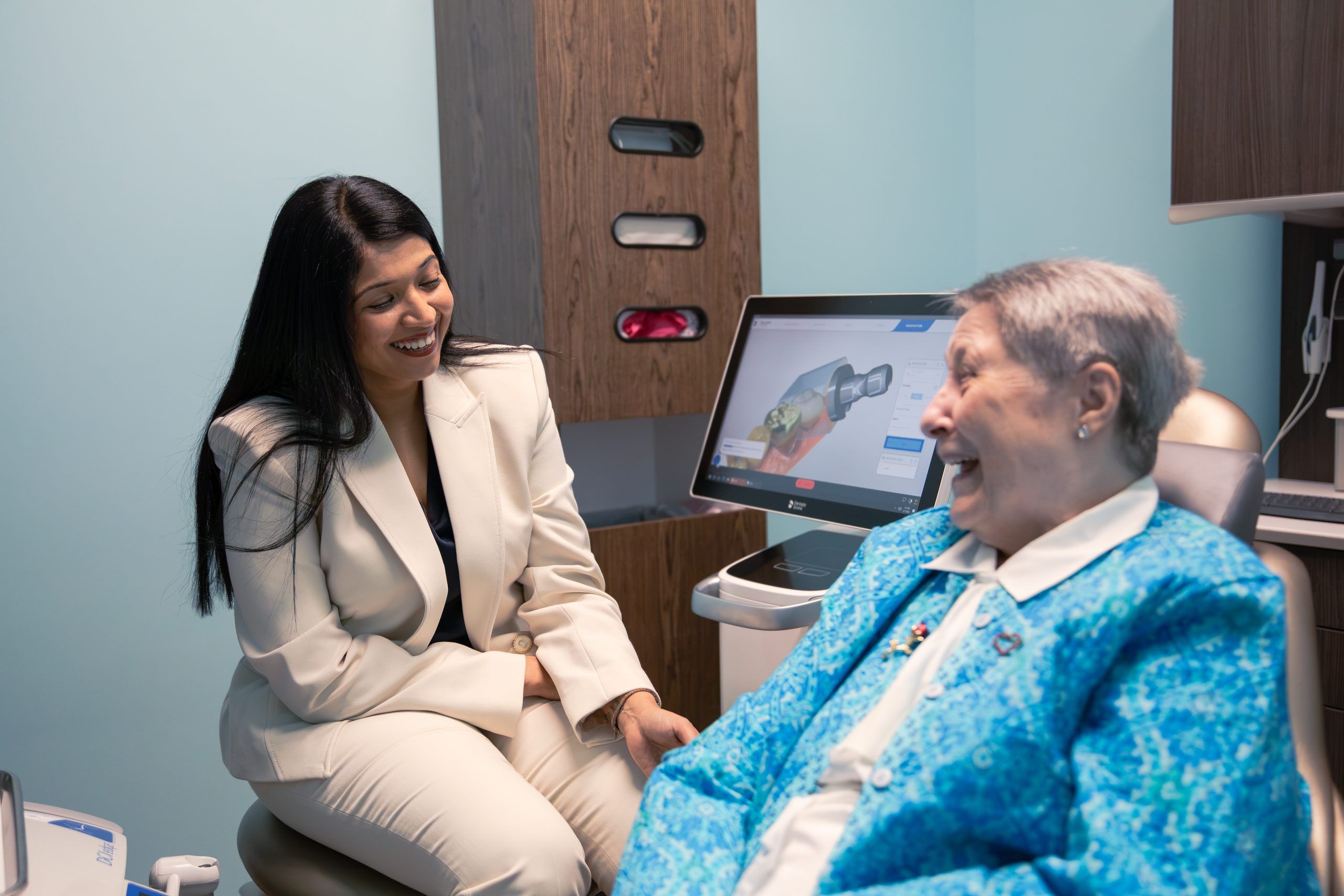
A balanced bite protects everything
When chewing forces are shared evenly, your teeth, your dental work and your jaw all get a break. Here's what a balanced bite means for you.
Balancing your bite spreads chewing forces across your teeth, so no single tooth takes a beating it can't handle. Wear slows, and chips stop appearing. Teeth keep their shape.
Crowns, veneers and fillings placed on a stable bite are far less likely to crack or come loose, so you're not paying for the same repair twice. Repairs hold up for years.
When teeth meet evenly, the jaw muscles don't have to strain to find a comfortable position, which can ease soreness and tension. Jaw tension often eases.
Correcting the bite early protects teeth before they need bigger repairs, so more of your own tooth stays for the decades ahead. Your smile stays strong.
When teeth and dental work stop breaking, you spend less time and money on the same repairs over and over.
How we measure and correct your bite
Bite correction means finding where your teeth meet unevenly, then balancing them. Four tools guide the work, starting with precise measurement.


A digital map of your bite
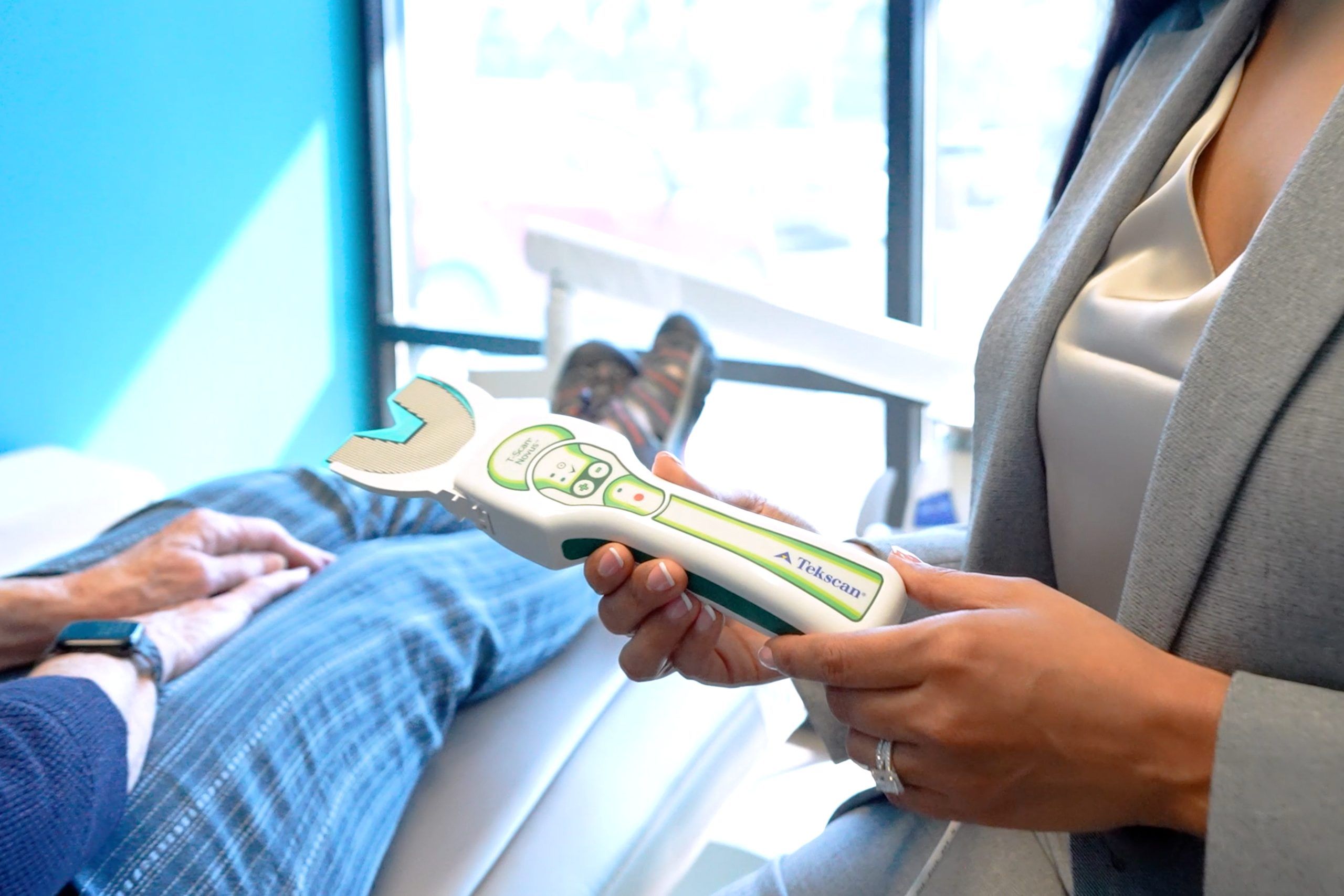
T-Scan digital bite analysis measures the timing and force of every contact, so problem spots are clear.


A mouthpiece that relaxes
A Kois deprogrammer lets your jaw muscles relax, so we can see where your jaw naturally wants to close.


Small adjustments first
Often, precise reshaping of a few high spots, called an occlusal adjustment, is enough to balance the bite.


Aligners when needed
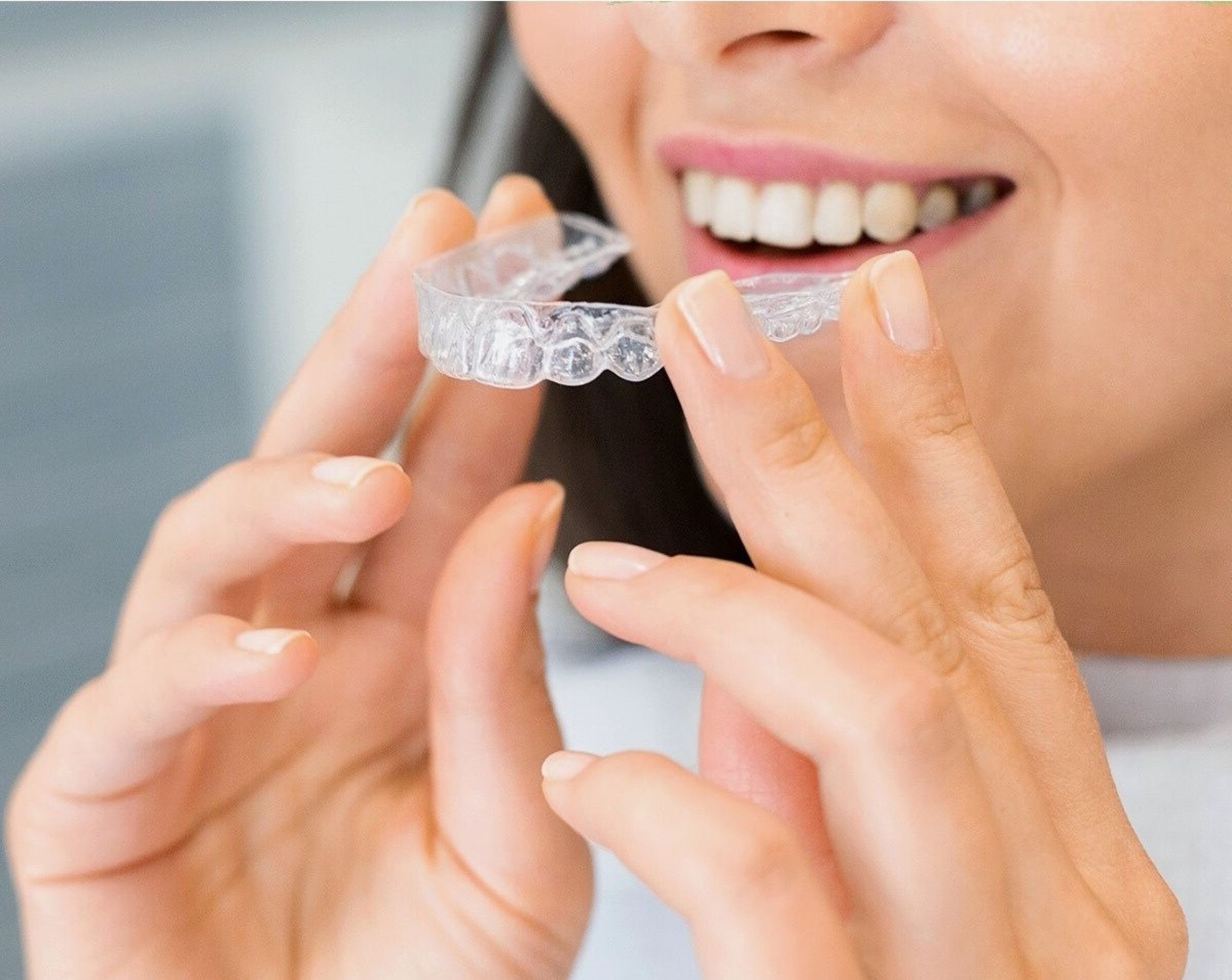
When teeth need to move, clear aligners shift them into a stable position before any restorations.
Who bite correction helps
It helps people with worn, flattened, chipped or cracked teeth, dental work that keeps failing, or a bite that feels off, including after a new crown or filling.
Bite correction protects the teeth and dental work you already have, and often brings relief from jaw strain too. Many bites are balanced with small, precise adjustments.
Book your bite evaluation
From bite map to a stable bite
Measure your bite
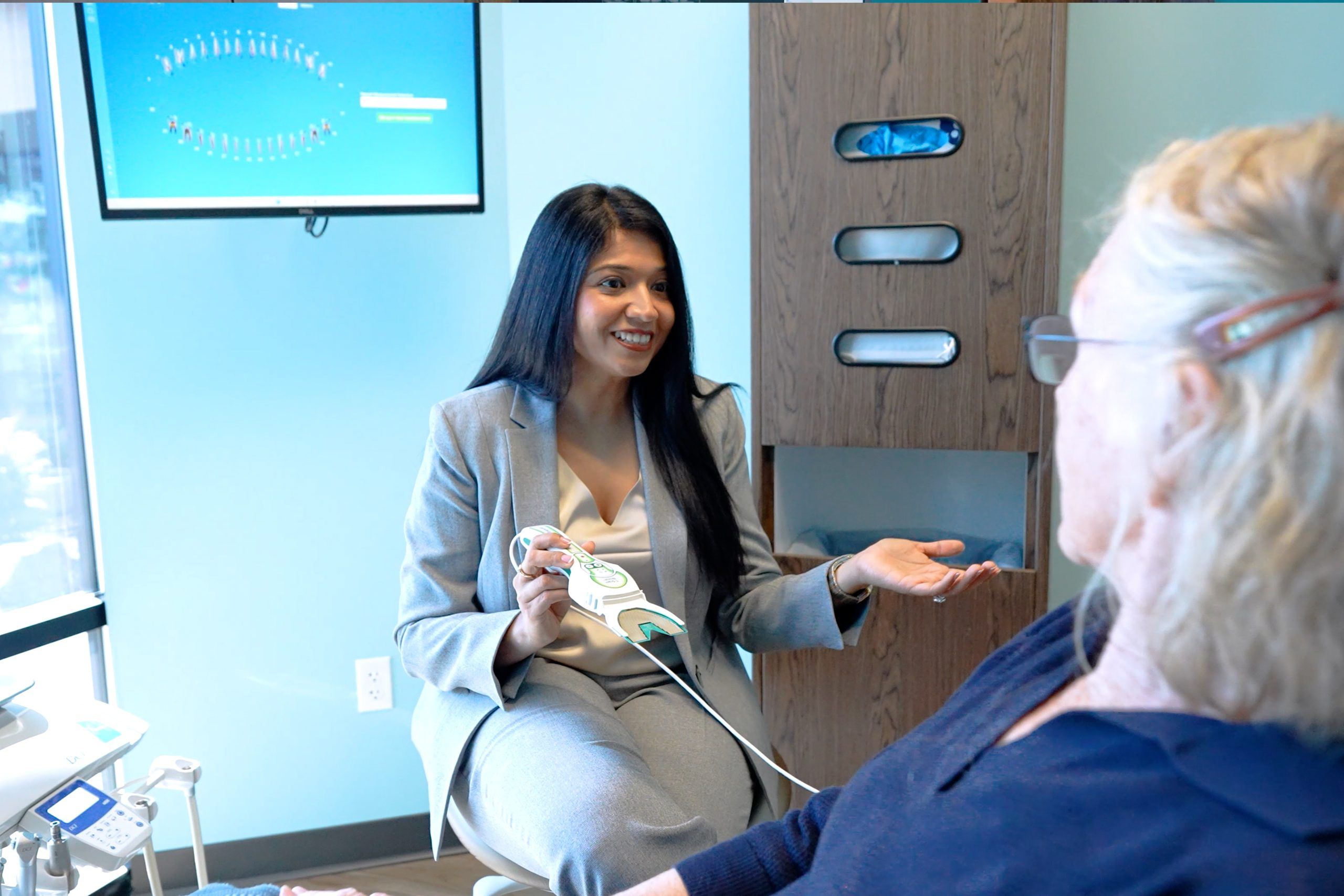
We examine your teeth and jaw and map your bite digitally to see exactly where it's uneven, with no guesswork.
Find the cause
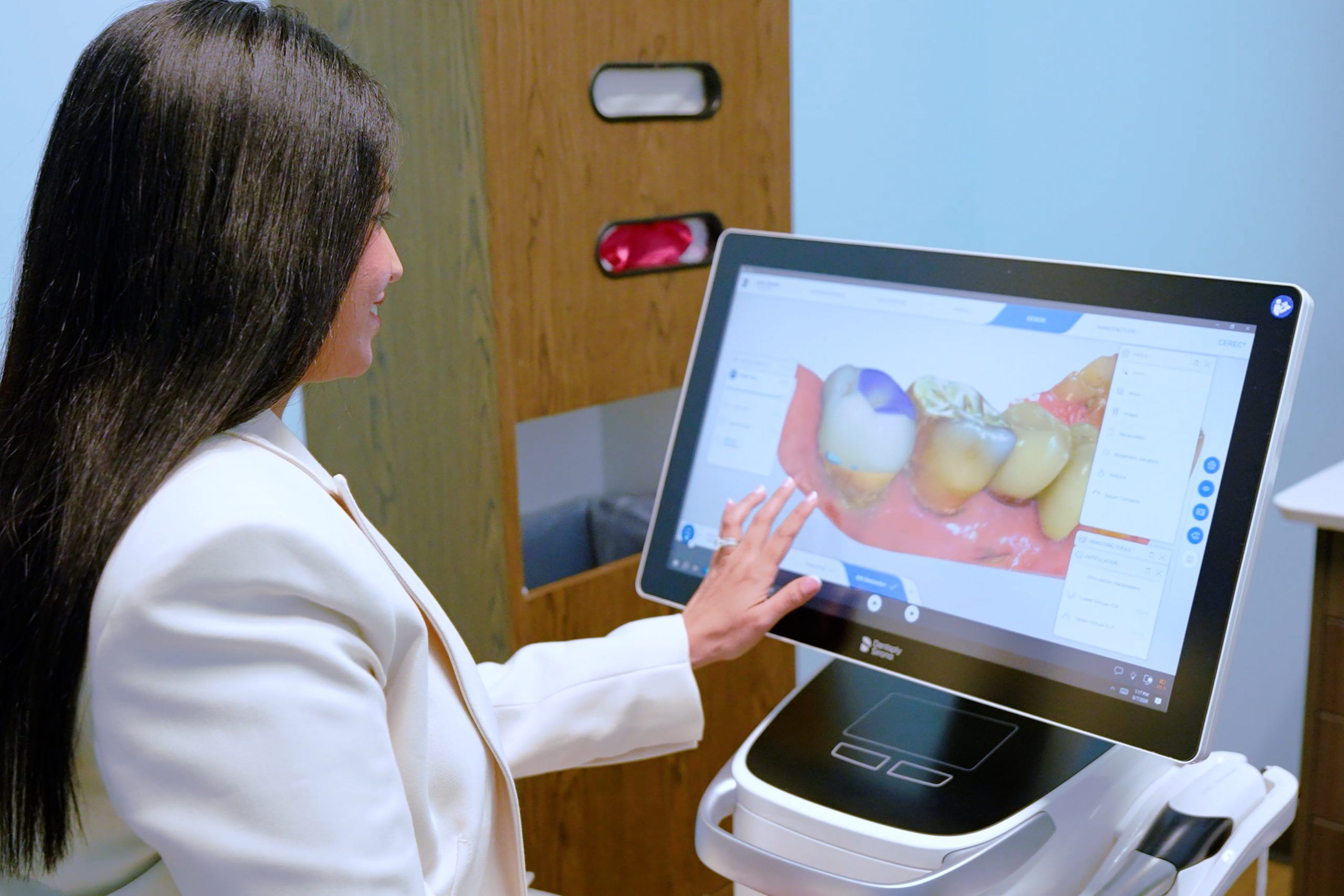
Dr. Shahid shows you on screen where your bite is uneven and why it's causing damage.
The most conservative correction
From small adjustments to aligners or restorations, we start with the least invasive option that will last for years.
Check the result
We remeasure your bite to confirm it's balanced, comfortable and stable after every change.
A gentle dentist who champions your lifelong health
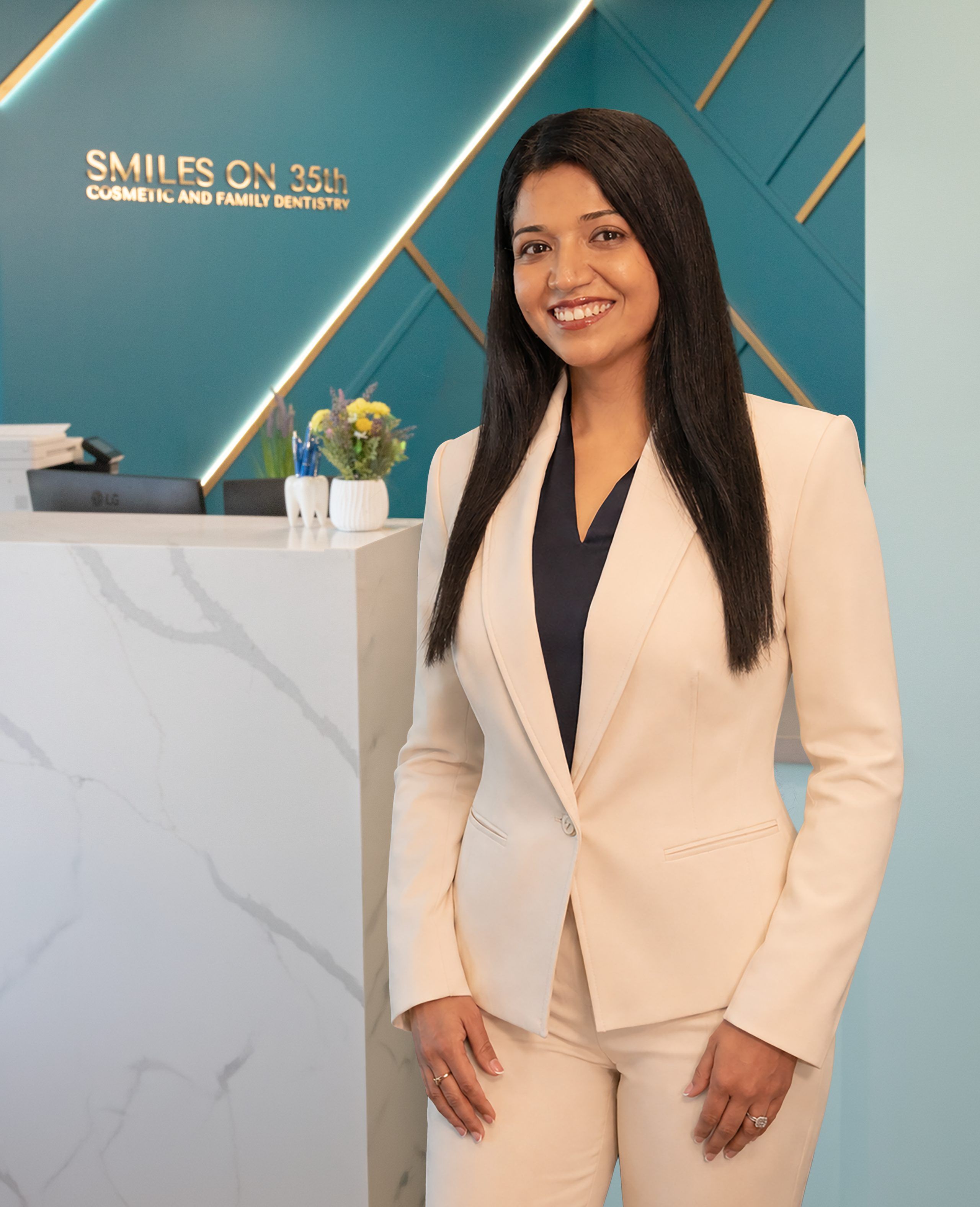
Dr. Rubecca Shahid owns SMILES ON 35th in Wedgwood and leads your care herself, gently and with time to listen. Her own health struggles, then her mother's diagnosis, left her asking what the point of all our hard work is without the health to enjoy it. Longevity dentistry is her answer: care that protects your mouth and your health, so you can enjoy the life you're building.
Her care is conservative: she saves natural tooth wherever she can, chooses the least invasive option that will last, and recommends only treatment that truly helps you. When a tooth needs more, she shows you why. She is empathetic and thorough, with clear choices and no pressure.
She champions your long-term health and has trained to deliver on it. A Kois Center graduate, one of about 1,200 dentists worldwide, she completes nearly eight times the continuing education Washington requires every year. Her training spans prevention, function and sleep, restoration and smile design, so one dentist who knows you can plan each stage, close to home.
- Advanced training in diagnosis, treatment planning and bite stabilization from the Kois Center
- Biomimetic Dentistry Practitioner with mastership from the Alleman Center
- Member of American Academy of Dental Sleep Medicine
- Member of American Academy of Cosmetic Dentistry
I came to longevity dentistry through my own health journey, wanting to understand why problems start and how to prevent them. What I needed then is what I want for you now: more good years, a smile you feel good about, and a dentist who listens.
The training behind every bite correction
Correcting a bite takes precise measurement and a deep understanding of how teeth, muscles and joints work together. These are the specifics behind ours.

Trained in the bite
Dr. Shahid is a Kois Center graduate, trained in how teeth meet and how the bite and jaw work together.

Bite measured, not guessed
T-Scan is rare in general practice. Most dentists check the bite with marking paper; we measure every contact.

The smallest change first
We start with precise adjustments before considering aligners or restorations.

Care under one roof
Aligners, restorations and night guards are all here, so any next step stays coordinated.

Hear it from our patients
Before you book, it helps to hear from people who have been in the chair. Read what patients say about their visits and treatment at SMILES ON 35th.
Read more reviewson Google (opens in a new tab)This was my first visit, and my experience was excellent from start to finish. The team was professional, responsive, patient and compassionate when answering my questions. Dr. Shahid was kind and thorough, and took the time to clearly explain my dental health and treatment plan. She outlined what needed attention, prioritized the recommended work and was refreshingly honest about what could wait. I never felt pressured into unnecessary treatment, which I greatly appreciated. Thank you, Dr. Shahid, Elicia, Hana, Cohrin and everyone at SMILES ON 35th!
Bite correction questions
Common signs include teeth that are wearing flat, chipping or cracking, fillings that keep breaking, a sore jaw, or a bite that feels uneven when you close. A digital bite map confirms it.
Teeth usually wear down from an uneven bite, grinding or clenching, or acid from food and drinks. Finding which one is at work tells us how to stop the wear.
It depends on the cause. Many bites are balanced with small, precise adjustments to a few teeth. Others need clear aligners to move teeth, or restorations to rebuild worn ones. We start with the most conservative option.
It can, when an uneven bite is straining your jaw muscles. We check your joints and muscles first, so an adjustment is only made when it will help.
Often a small adjustment fixes it. We map your bite to find exactly where the new work meets too hard, and refine it.

Reviewed by Dr. Rubecca Shahid Updated
Other ways to protect your bite
Jaw pain, teeth that need straightening, or wear across many teeth? These pages explain the options that often go with bite correction.