
Can an Early Cavity Heal Without Drilling?
Often, yes, while the enamel surface is still intact. See how fluoride, saliva, and a no-drill treatment can reverse tooth decay, and when you need a filling.
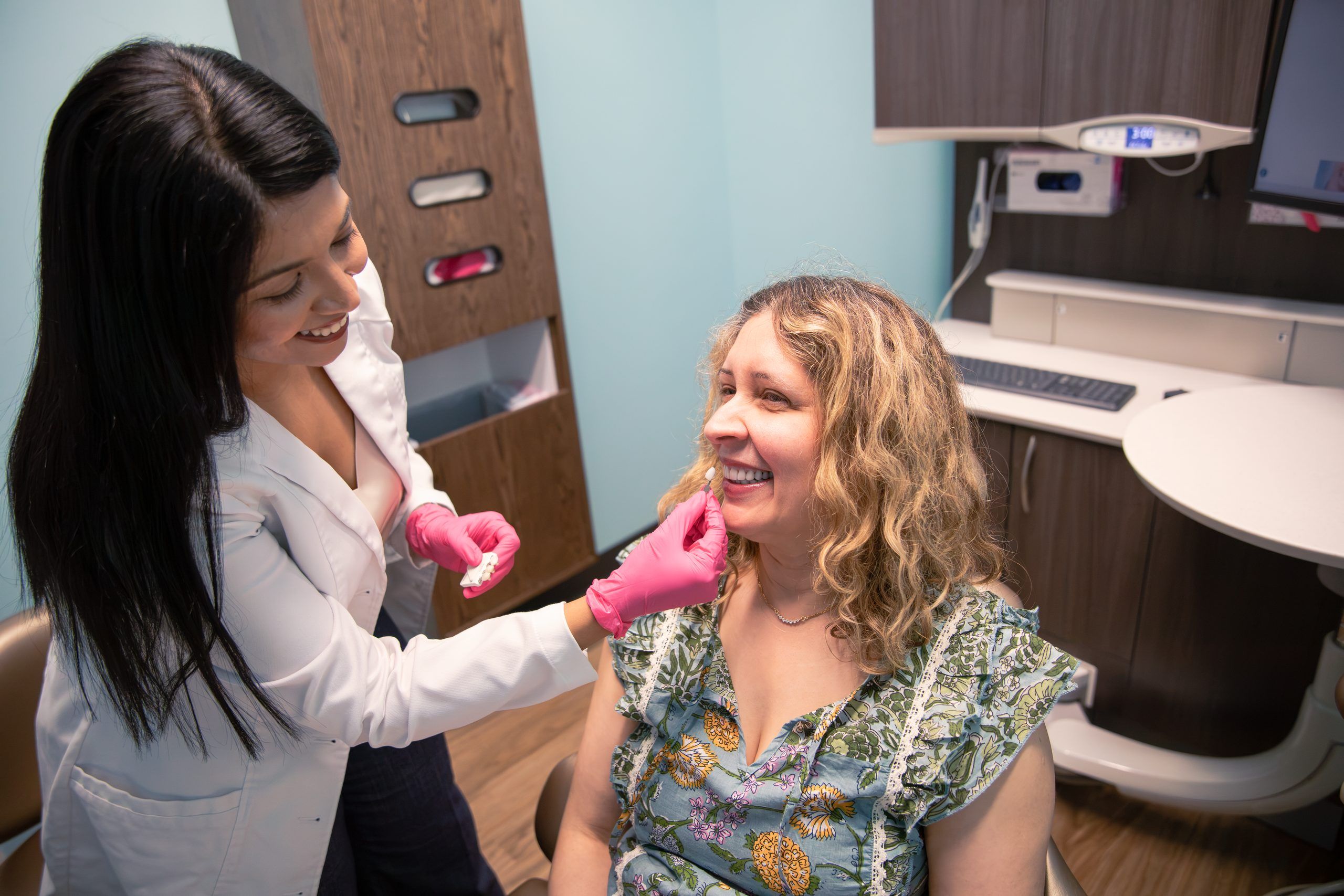
Often, yes. An early cavity can heal if it is caught while the enamel surface is still intact. At that stage, the decay is a patch of enamel that has lost minerals, and it can harden again with fluoride, healthy saliva, and a no-drill treatment called Curodont. Once decay breaks through the surface and forms a hole, enamel cannot grow back, and the tooth needs a filling.
Whether yours can heal comes down to two things: how far the decay has gone, and what is driving it. At SMILES ON 35th in Seattle, Dr. Rubecca Shahid answers both questions before recommending treatment, so you keep as much of your natural tooth as possible for decades to come.
Can an early cavity heal on its own?
An early cavity can heal on its own, as long as the conditions that started it change. Your teeth lose and regain minerals all day. Each time you eat or drink something with sugar or starch, bacteria in plaque turn it into acid that pulls minerals out of your enamel. Between those acid attacks, calcium and phosphate from your saliva, and fluoride from toothpaste and water, put minerals back. The National Institute of Dental and Craniofacial Research (NIDCR) describes this as a tug-of-war that goes on in your mouth every day.
When acid wins often enough, enamel loses more minerals than it regains. That loss is called enamel demineralization. Its first visible sign is often a white spot lesion: a chalky patch where the enamel just under the surface has turned porous while the surface above it stays whole. Many early lesions sit between teeth, where only an X-ray can show them, and very few of them hurt.
At this stage, the NIDCR notes, decay can be stopped or even reversed. Remineralization is the repair side of the tug-of-war: minerals move back into the weakened enamel and harden it again. Saliva and everyday fluoride can do this on their own once acid attacks become less frequent. If nothing changes, the same acid keeps winning, and the spot keeps growing.
If you have ever heard “we’ll keep an eye on that one” at a check-up, this is why what happens between visits matters. Watching a spot is reasonable. Watching it while everything that caused it stays the same gives it room to progress.
Can tooth decay be reversed?
Tooth decay can be reversed up to a point: until it breaks through the enamel surface. After that, the damage is permanent. Enamel is the hardest tissue in your body, but it has no living cells to regrow it, so the tooth cannot fill a hole with new enamel. The NIDCR calls a cavity permanent damage that a dentist has to repair with a filling.
A remineralized spot counts as a success: the enamel is hard again, and the decay has stopped. A hole is different. It collects plaque where a toothbrush cannot reach, which is why a cavity that has broken through tends to keep growing.
That line between an intact surface and a hole decides whether you need a filling. It is also why catching risk before it becomes damage pays off: the earlier decay is found, the more options keep your tooth whole.
How fluoride and saliva rebuild enamel
Fluoride does two jobs. According to the NIDCR, it helps enamel replace the minerals it has lost, and it makes bacteria less able to produce acid. For early lesions that have not formed a cavity, professional fluoride varnish applied every three to six months is one of the treatments recommended in the American Dental Association’s clinical guideline on cavity treatment without drilling. A fluoride toothpaste keeps that protection going at home.
Saliva is the other half of the repair. It rinses away food, helps keep harmful bacteria in check, and carries the calcium and phosphate your enamel uses to rebuild. When your mouth makes too little of it, the risk of tooth decay rises. Hundreds of medications can reduce saliva, including some for high blood pressure and depression.
How often acid hits your teeth matters as much as how much sugar you eat. Sipping a sports drink through a long training session, or a sweetened coffee across a morning of meetings, gives enamel little time to recover between attacks.
What is Curodont?
Curodont is a no-drill treatment that helps an early cavity rebuild its own enamel from the inside. It is applied directly to the surface of an early lesion, and its active ingredient, a self-assembling peptide called P11-4, soaks into the porous enamel below the surface and links into a fine scaffold. That scaffold draws in calcium and phosphate from your saliva and helps new enamel crystals form throughout the lesion. A 2017 laboratory study in the Journal of Dental Research found that this process mimics the way enamel forms naturally.
The appointment is simple. The tooth is cleaned and prepared, and Curodont is applied to the spot, with no drilling, no numbing, and no healthy tooth removed. Rebuilding then continues as your saliva supplies minerals.
The evidence is promising, and still growing. A 2022 review of 18 laboratory and clinical studies found that P11-4 remineralized early enamel lesions better than the treatments it was compared with, and its authors called for longer-term studies to confirm the results. That honest picture shapes how Curodont is used: as one part of a plan, never a stand-alone fix, with the spot checked again at later visits.
Curodont is for an early lesion with an intact surface. It cannot fill a hole. At SMILES ON 35th, it is part of our cavity prevention protocol, alongside salivary testing, fluoride, and CariFree home care.
What’s driving your decay?
Rebuilding one spot protects that tooth. Changing what caused it protects the rest of your mouth. Brushing is only part of the story: the bacteria in your mouth, how often you eat or sip, and the amount and quality of your saliva all play a part, and the mix is different for everyone.
A simple saliva test shows which bacteria are at work in your mouth and how well your saliva is protecting your teeth. With those results, prevention can target what drives your decay instead of following a generic routine. If your test shows high levels of cavity-causing bacteria, for example, your home care can include CariFree products, which are designed to neutralize acid and support remineralization between visits. A retest later shows whether the balance has shifted. You can read more about what a saliva test reveals.
Measuring risk is central to how Dr. Shahid works. She is a graduate of the Kois Center in Seattle, an advanced program in comprehensive diagnosis and risk assessment, so she rates each patient’s cavity risk and spaces check-ups to match it. Your visits follow your risk, not a fixed calendar.
Do small cavities need to be filled?
Small cavities do not always need to be filled. One that is still within the enamel, with its surface intact, can often be stopped and rebuilt instead. A filling becomes necessary once the surface has broken down into a hole, or when decay keeps progressing despite prevention.
Size alone does not decide it. A tiny hole needs a repair, while a larger chalky spot with an intact surface may not. Your exam settles the question with a close look at the tooth and quick, low-radiation digital X-rays that show how deep the decay reaches. Dr. Shahid shows you what she sees on screen, so you understand the reason behind whatever she recommends.
When a filling is needed, the aim is the smallest repair that will last. At SMILES ON 35th, every filling is a bonded filling: Dr. Shahid removes only the decay and bonds tooth-colored composite resin to the healthy tooth that remains, instead of cutting the tooth into a shape that holds the filling in place. More of your natural tooth stays.
That matters beyond the first repair. Fillings do not last forever, and replacements tend to grow. In a study of 1,337 decisions to replace existing fillings and crowns in back teeth, 70% of the recommendations increased the number of tooth surfaces restored. Each round leaves less natural tooth behind, a pattern explained in why fillings and crowns fail. Keeping a tooth free of fillings for as long as it stays healthy is one of the simplest ways to protect it for life.
How to find out if yours can heal
You cannot tell by feel whether an early cavity can heal. Most cause no pain, and many sit where you cannot see them. A comprehensive exam can tell you.
At SMILES ON 35th, that exam is unhurried. Dr. Shahid looks closely at your teeth, takes the X-rays she needs, adds a saliva test when your risk calls for it, and walks you through the findings on screen. If a spot is early, you leave with a plan to rebuild it without a drill. If a tooth needs a filling, you know why, and that it will be as small as it can be. There is no judgment about past cavities or time away from the dentist, and no pressure to decide on the spot.
Caught early, decay can still be undone. See what your first visit includes, then book a comprehensive exam to find out where your teeth stand.
More questions about early cavities
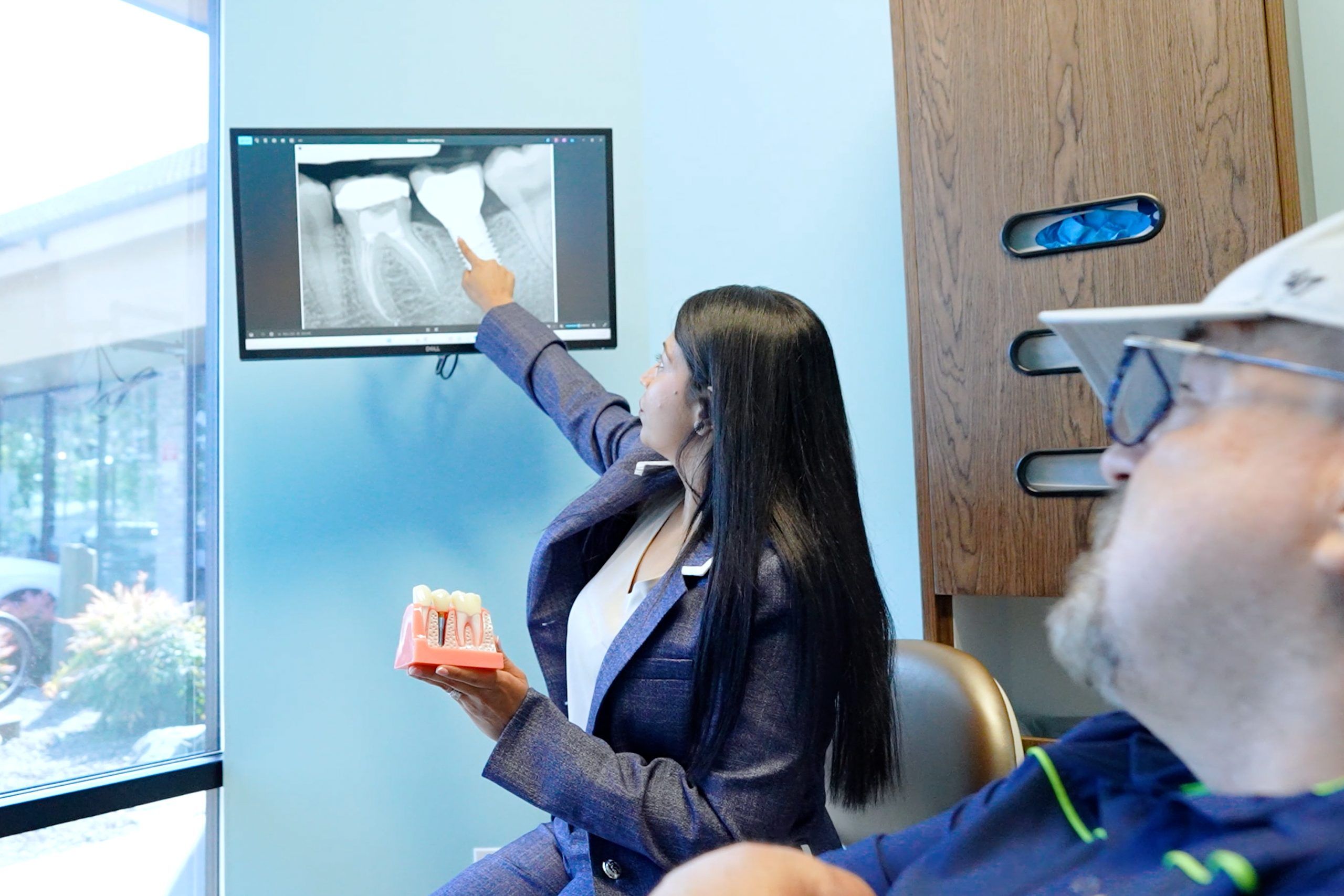
Often, yes, if it is caught before the enamel surface breaks down. Early cavities between teeth are common and hard to see in a mirror, so X-rays are how they are found and measured.
Fluoride varnish is one of the no-drill options the American Dental Association's guideline recommends for these surfaces, along with resin infiltration. X-rays at later visits show whether the decay has stopped.
Sometimes. An early cavity that has hardened and stopped growing can stay visible as a white or brownish mark, even though the enamel beneath it is stable.
That mark is usually only cosmetic. On a front tooth, ICON resin infiltration can fade a white spot without drilling by filling the porous enamel with a clear resin, so it reflects light like the enamel around it.
About the author
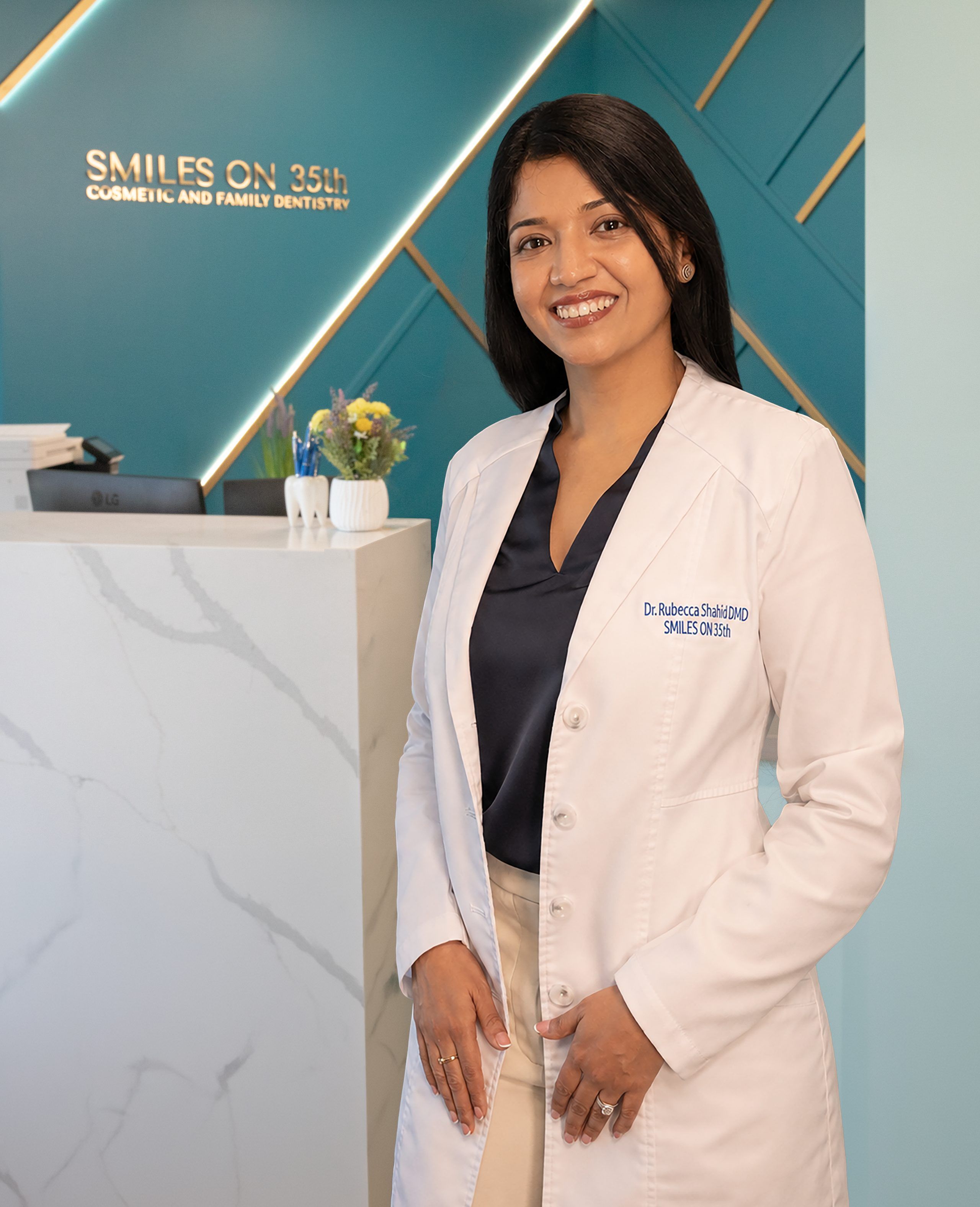
Dr. Rubecca Shahid, DMD
Dentist
Dr. Shahid practices longevity dentistry at SMILES ON 35th, her independent, woman-owned practice in Seattle where every plan starts with a diagnosis of your teeth, gums, bite, and airway. A graduate of the University of Illinois at Chicago College of Dentistry and Seattle's Kois Center, she holds a Mastership in biomimetic dentistry from the Alleman Center and completes nearly eight times the continuing education Washington requires each year.
She is a member of the ADA, AGD, AACD, AADSM, WSDA, and Seattle Study Club, and writes these articles so you can understand what is happening in your mouth and make informed decisions for your long-term health.
Meet Dr. Shahid