
How Long Do Dental Implants Last?
Dental implants can last for decades, often for life. See why the crown may need replacing sooner, what makes implants fail, and how good care protects yours.
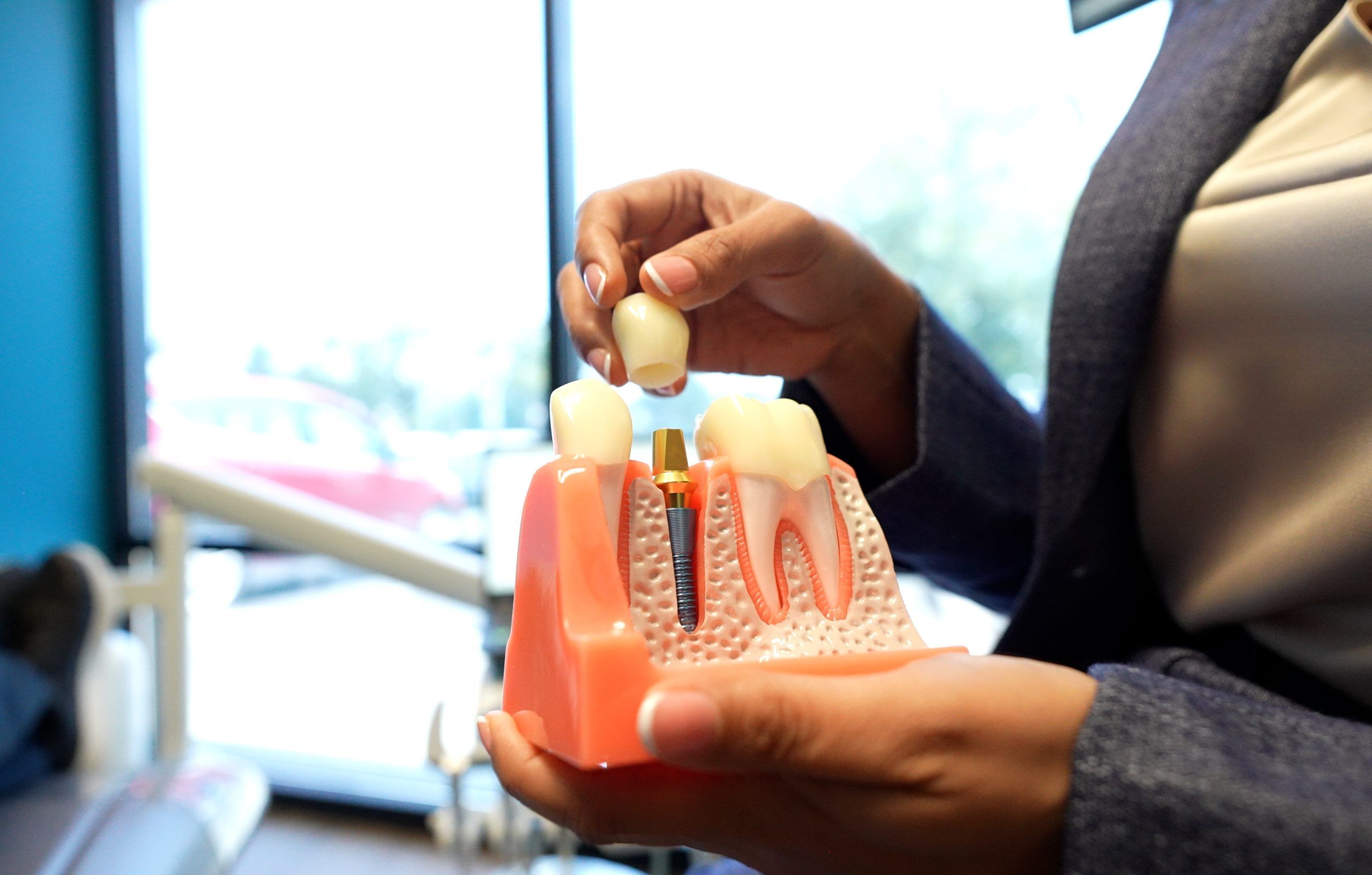
A well-planned dental implant can last for decades, and for many people a lifetime. The implant itself, a small post fused into your jawbone, is built to stay. The crown on top wears like any restoration and may need replacing sooner.
If you’re asking how long dental implants last, you’re really asking whether one is worth the investment. At SMILES ON 35th in Seattle, Dr. Rubecca Shahid plans every implant around that question. The answer depends on three things you and your dentist can influence: healthy gums, a bite that doesn’t overload the implant, and care that continues long after it’s placed.
What do long-term studies show?
Implants are among the most dependable treatments in dentistry, and the long-term research supports that. A 2019 systematic review of modern implants followed for at least 10 years estimated that 96.4% were still in place at 10 years. The authors also found lower survival in people 65 and older, and a lower estimate, about 93%, once they allowed for patients who dropped out of the studies. These are results from careful studies, not a guarantee for any one mouth.
Studies that run longer are rarer. In a Swiss study of implants placed in the 1980s, 89.5% were still in place after 20 years.
That is the time horizon worth planning for. An implant placed in your 50s, with a healthy foundation and steady care, has a real chance of serving you into your 70s and beyond.
Are dental implants permanent?
A dental implant is designed to be permanent. It isn’t removed for cleaning or taken out at night. Over a few months after placement, bone grows onto the implant’s surface and locks it in place, a process called osseointegration. Once that bond forms, the implant works as a new root.
How well that bond forms depends partly on bone density, meaning how much solid bone there is to hold the implant. Bone shrinks where a tooth has been missing for a while. When it has, a bone graft can often rebuild it first.
Permanent is not the same as guaranteed. The implant stays only as long as the gum and bone around it stay healthy, and both can break down. That is where most of the long-term risk lies, and where most of the protection comes from.
How often does an implant crown need replacing?
The implant crown, the visible tooth attached to the implant, takes every bite, so it usually wears out before the post beneath it. A review of single implant crowns estimated that 95.2% of the implants were still in place after 10 years, compared with 89.4% of the crowns on them. The technical problems it tracked over five years included loosened screws, crowns coming loose, and chipped porcelain.
That gap is good news. Replacing an implant crown is a much smaller job than replacing an implant: the post stays in the bone, and only the tooth on top is remade. How soon that happens depends on your bite, whether you grind, and the material. At SMILES ON 35th, implant crowns are designed and milled in our office and matched to your other teeth.
What causes dental implants to fail?
Most implant problems come from one of two sources: infection of the gum and bone around the implant, or more force than the implant can handle. Smoking and poorly controlled diabetes add to the risk. Occasionally, an implant never fuses with the bone during the first months of healing.
Infection around the implant
Peri-implantitis is gum disease around an implant. Bacteria inflame the gum, then destroy the bone that holds the implant in place. Like gum disease around a natural tooth, it often causes no pain in its early stages. Left untreated, the bone loss can loosen the implant.
The 2017 World Workshop on periodontal and peri-implant diseases found strong evidence for three risk factors: a history of gum disease, poor plaque control, and no regular maintenance after the implant is placed. Each one shapes how an implant should be planned and looked after.
If you’ve had gum disease, it matters twice over. The disease process that cost the tooth can threaten its replacement, and gum inflammation is associated with conditions elsewhere in the body, including heart disease.
Heavy bite forces and grinding
A natural tooth sits in a cushioning ligament that gives slightly under pressure and senses how hard you’re biting. An implant is fused directly to bone, so it has no such cushion. Clenching and grinding, called bruxism, load it hard, often at night when you don’t know you’re doing it.
A 2024 meta-analysis found that implants in people with probable bruxism had about twice the odds of failing as implants in people without it. If you clench through heavy lifts or wake with a tired jaw, it’s worth reading about why people grind their teeth before you plan an implant.
Smoking and blood sugar
In a review of 107 studies, 6.35% of implants in smokers failed, compared with 3.18% in nonsmokers. A separate review found that people with diabetes had about 1.5 times the risk of peri-implantitis, and among nonsmokers, high blood sugar was linked to a considerably higher risk. These are associations, not proof that either factor alone causes failure. If you already track your HbA1c, it is one more number that matters to your mouth.
Why do healthy gums come first?
An implant placed in an inflamed mouth faces the same disease that cost the tooth. So at SMILES ON 35th, gum disease, inflammation, and infection are brought under control before an implant is placed.
That starts with a comprehensive assessment of your gums, teeth, bite, and smile to catch issues early on. Dr. Shahid is a graduate of the Kois Center, an advanced program in comprehensive diagnosis, risk assessment, and treatment planning, so your gum health and your bite are weighed before an implant is chosen. A simple saliva test shows which bacteria are at work in your mouth, and gum treatment targets what the test finds.
Many implants start with removing a failing tooth. When a tooth can’t be saved, we plan its replacement before it comes out. A bone graft in the empty socket can keep the bone from shrinking, so an implant stays possible.
How does 3D planning protect an implant?
Every implant at SMILES ON 35th is planned on a 3D view of your bone, roots, nerves, and sinuses before it is placed. That view comes from 3D CBCT imaging taken in our office. The American Academy of Oral and Maxillofacial Radiology recommends this kind of cross-sectional imaging for every implant site, with CBCT as the method of choice.
For you, that planning means an implant set where the bone can support it, clear of the nerves, and angled so the crown takes your bite evenly and you can clean around it. A custom guide made from the 3D plan then helps place the implant where it was planned. Dr. Shahid has advanced implant training and places implants herself, so one dentist carries your care from the first scan to the finished crown. You can read more about how we plan implants.
How do you keep an implant healthy for decades?
An implant lasts longest with maintenance that continues for life. At SMILES ON 35th, that care is built around your own risk:
- Cleanings on your schedule. How often you’re seen depends on your gum health and history, not a fixed calendar, and we check every implant at every visit.
- Bite checks over time. Teeth shift and wear over the years, so the forces on an implant crown change too. A digital map of how your teeth meet, when needed, shows whether the implant is taking more than its share.
- A night guard when you need one. If you grind or clench, a custom night guard protects the implant and its crown while you sleep.
- Daily care at home. Brushing and cleaning around the implant keep bacteria from settling where the gum meets the crown.
Planning an implant built to last
An implant’s lifespan is decided largely by the planning before it and the care after it. Healthy gums give it a sound foundation. A balanced, protected bite keeps force within limits. Steady maintenance catches small problems while they are still small.
If you’re missing a tooth, or have been told one can’t be saved, start with a comprehensive exam. You’ll see your own images, hear what helps or threatens an implant in your mouth, and leave with a plan and its full cost before any treatment begins. There’s no judgment and no pressure, and oral sedation is available if dental visits make you anxious. When you’re ready, book your exam and we’ll plan an implant designed to go the distance.
More questions about implant care
No. A dental implant and its crown are made of materials that cannot decay, but the gum and bone around them can still become infected.
That infection, called peri-implantitis, is one of the main long-term threats to an implant. Cleaning around the implant every day, and professional cleanings on a schedule set by your risk, protect it the same way they protect natural teeth.
Bleeding, swelling, or tenderness in the gum around an implant are the most common early signs of trouble.
Other signs include pus, a bad taste, gum pulling back from the crown, or a crown that feels loose. Infection around an implant is often painless at first, so these signs are worth having checked promptly, while the problem is easier to treat. SMILES ON 35th keeps same-day appointments for urgent dental problems.
Often, yes. Smoking and poorly controlled diabetes raise the risk of implant problems, but neither automatically rules out an implant.
Dr. Rubecca Shahid reviews your medical history before planning an implant and explains how your risk factors affect it. Cutting back on smoking, and working with your physician to keep blood sugar in range, give an implant better odds.


About the author
Dr. Rubecca Shahid, DMD
Dentist
Dr. Shahid practices longevity dentistry at SMILES ON 35th, her independent, woman-owned practice in Seattle where every plan starts with a diagnosis of your teeth, gums, bite, and airway. A graduate of the University of Illinois at Chicago College of Dentistry and Seattle's Kois Center, she holds a Mastership in biomimetic dentistry from the Alleman Center and completes nearly eight times the continuing education Washington requires each year.
She is a member of the ADA, AGD, AACD, AADSM, WSDA, and Seattle Study Club, and writes these articles so you can understand what is happening in your mouth and make informed decisions for your long-term health.
Meet Dr. Shahid