
Why You Grind Your Teeth, and How to Protect Them
Stress, caffeine, alcohol, medications, and disturbed sleep breathing can all drive grinding. Learn the signs, the damage, and how to protect your teeth.

Teeth grinding and clenching usually have more than one cause. Stress, caffeine, alcohol, some medications, and breathing that gets disturbed during sleep are common contributors, and much of the grinding happens without you knowing. If you’re wondering why you grind your teeth, the useful answer is your own mix of reasons, because that mix decides how to protect your teeth for the long run.
At SMILES ON 35th in Seattle, Dr. Rubecca Shahid looks for that mix by examining your bite, jaw joints, and airway together, so your teeth are protected while the reasons behind the grinding are addressed.
Why do I grind my teeth?
Grinding and clenching, called bruxism, are repeated jaw-muscle activity outside of chewing. An international consensus of researchers describes two kinds: sleep bruxism, during sleep, and awake bruxism, the clenching or bracing you do during the day, often while concentrating. In otherwise healthy people, it is a behavior rather than a disease, and it becomes a problem when the force does damage.
Both kinds are common. A review of population studies found that roughly 1 in 8 adults report frequent grinding in their sleep, and between 22% and 31% report clenching while awake.
In a survey of more than 13,000 adults in the UK, Germany, and Italy, people were more likely to report grinding in their sleep when they had:
- A highly stressful life or anxiety.
- Heavy alcohol use or regular caffeine.
- A smoking habit.
- Obstructive sleep apnea or loud snoring. Sleep apnea and heavy drinking carried the highest odds in the study.
Medications can play a part too. Case reports link certain antidepressants, including fluoxetine, sertraline, and venlafaxine, to new grinding or jaw pain, often within a few weeks of starting them. If you notice a change after starting one, talk with your prescriber rather than stopping it yourself.
These are associations, not proven causes, and many people have more than one at work. That is why the answer differs from person to person.
Jaw clenching while lifting
If you strength train, you may clench hard without noticing. Bracing the jaw during a maximal effort is so instinctive that sports researchers study whether it adds strength. A heavy set of squats or deadlifts can mean repeated, full-force contact between your back teeth, on top of any grinding at night and any clenching at your desk.
Your teeth carry that load too. If you train seriously, mention it at your exam, because it helps explain the wear on your teeth.
How do I know if I grind my teeth at night?
The clearest signs usually come from someone else or from your teeth, because sleep grinding happens while you’re unaware. Common clues:
- A partner who hears grinding at night.
- A tight, tired, or sore jaw when you wake, or dull headaches around your temples.
- Teeth that look flatter, shorter, or chipped along the edges.
- Teeth that have become sensitive to cold.
- Fillings or crowns that crack or loosen without an obvious reason.
An exam can confirm it. A 3D scan of your teeth shows wear facets, the small, flat, polished spots that grinding leaves behind, and you can see them on screen for yourself. For bruxism alone, the American Academy of Sleep Medicine notes that a sleep study is rarely needed. One becomes useful when the signs also point to sleep apnea.
Can teeth grinding damage your teeth?
Yes. The force of grinding and clenching adds up over years, and the damage builds so gradually that many people notice only when something breaks.
- Enamel wear. Enamel is the hard outer layer of your teeth, and it does not grow back. Grinding flattens the biting edges and can expose the softer layer beneath, which wears faster and feels sensitive. Acid from food and drinks wears enamel too, so the pattern of wear helps show which is at work.
- A cracked tooth. The American Association of Endodontists names grinding and clenching among the everyday causes of cracked teeth. A cracked tooth often causes sharp, unpredictable pain when you chew.
- Broken dental work. Fillings and crowns face the same force as the teeth around them, and grinding is a common reason they break. Learn more about why fillings and crowns fail.
- Strained jaw joints and muscles. Your jaw joints, or TMJs, sit just in front of your ears. Constant clenching can overload them and the chewing muscles. For some people, that becomes a TMJ disorder: ongoing jaw pain, clicking, or trouble opening wide.
Many jaw symptoms settle with simple, reversible care, and the National Institute of Dental and Craniofacial Research recommends starting there. That is how TMJ treatment at SMILES ON 35th begins.
Every repair also costs a little more natural tooth. Protecting your teeth early is how you keep more of them.
Is teeth grinding linked to sleep apnea?
Often, yes, although one has not been shown to cause the other. Obstructive sleep apnea is repeated narrowing or blockage of the airway during sleep, the most familiar form of sleep-disordered breathing. In the same European survey, people with obstructive sleep apnea were about 1.8 times as likely to report grinding in their sleep, and loud snorers were more likely too.
Some sleep studies have found grinding episodes clustered at the end of breathing pauses, as the brain briefly rouses. A systematic review concluded that the evidence is still too limited to call it a clear cause.
That overlap matters when choosing protection. In a small pilot study of 10 people with sleep apnea, a standard night guard increased breathing pauses per hour by more than 50% in half of them. It was one small study, but it is a good reason to check your airway before choosing a guard.
A sleep physician diagnoses sleep apnea. Dr. Shahid, a member of the American Academy of Dental Sleep Medicine, screens your airway during every comprehensive exam and refers you to a sleep physician when the signs call for it. If you also wake up tired after a full night in bed, read about when to look at your airway.
Does a night guard stop grinding?
Not on its own. A night guard for teeth grinding is a thin, custom-fitted mouthpiece you wear while you sleep. It takes the force of grinding in place of your enamel and dental work. A Cochrane review found too little evidence that these guards reduce grinding itself, while noting they may help protect against tooth wear.
That protection is worth having, and it starts working the first night. Custom night guards at SMILES ON 35th are made from a 3D scan of your teeth, so they fit closely, stay in place, and feel thinner than a store-bought guard. But a guard doesn’t explain why you grind. If the reason is your airway or your bite, protecting the teeth alone leaves it in place.
How do you stop grinding your teeth at night?
You may not stop it completely, but you can reduce what drives it and protect your teeth while you do. Start with what’s in your hands:
- Catch daytime clenching. At rest, your lips touch and your teeth stay slightly apart. Noticing clenching and relaxing your jaw is a habit change the NIDCR recommends.
- Move caffeine earlier and ease off alcohol in the evening. Both are linked to more grinding during sleep.
- Raise stress and any new medication with your physician.
The rest belongs in an exam. At SMILES ON 35th, Dr. Shahid looks at three things together:
- Your bite. A digital map of how your teeth meet (T-Scan bite analysis) measures the timing and force of every contact, showing whether a few teeth take more than their share. When an uneven bite is concentrating force and driving the wear, bite correction balances it, often with small, precise adjustments.
- Your jaw joints. A Kois deprogrammer, a small mouthpiece that lets your jaw muscles relax, shows how your joints truly fit once the muscles stop guarding. A 3D view of your jaw joints and airway (3D CBCT imaging) adds detail a standard X-ray can’t, when needed.
- Your airway. Signs of disturbed breathing during sleep are screened at the same visit, so your protection is chosen with your breathing in mind.
Dr. Shahid is a graduate of the Kois Center in Seattle, whose nine-course curriculum centers on diagnosis, risk assessment, and how the bite and jaw work together. She shows you what she finds on screen, then plans care that protects your teeth now and addresses what drives the grinding along with the damage.
Protect your teeth for the decades ahead
Grinding is common, it usually has more than one cause, and its damage stays quiet until something breaks. A custom night guard protects your teeth from the first night. An exam of your bite, jaw joints, and airway shows what to do about the reasons behind it. Together, they help you keep your natural teeth, and the dental work you’ve invested in, for decades.
If you wake with a sore jaw, or someone has mentioned the grinding, you don’t need to have it figured out before you come in. Your first visit at SMILES ON 35th is unhurried, with time to listen, no judgment, and no pressure. Dr. Shahid will show you what she sees and talk you through clear choices. See what your first visit includes, then book your exam when you’re ready.
Questions about teeth grinding
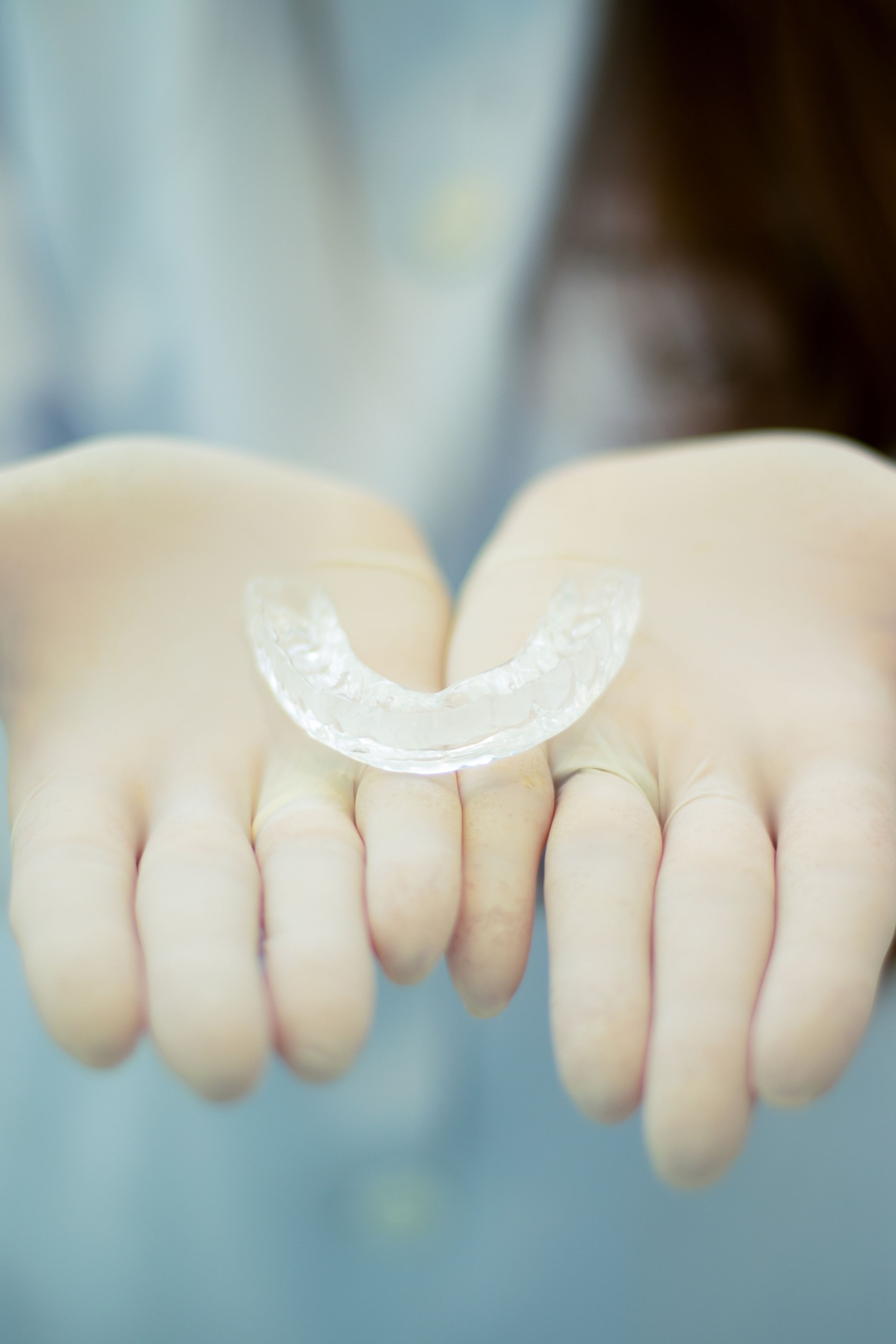
For regular grinding, a custom night guard is the better choice, because it fits your teeth and bite precisely and protects them evenly.
A custom guard is made from a scan of your own teeth and shaped around your bite, so it stays in place and feels thinner. A boil-and-bite guard is bulkier, and a poor fit can change how your teeth meet. If you snore or wake up tired, have your airway checked before relying on any guard, because in a small study a standard guard worsened breathing pauses for some people with sleep apnea.
A dentist is usually the best place to start, and your physician may become part of the picture.
A dental exam shows whether grinding is wearing or cracking your teeth, checks your bite and jaw joints, and screens your airway. Your physician is the right person for stress, anxiety, or a medication you think may be involved, and a sleep physician diagnoses sleep apnea. At SMILES ON 35th, Dr. Rubecca Shahid works alongside your physicians when findings reach beyond the mouth.


About the author
Dr. Rubecca Shahid, DMD
Dentist
Dr. Shahid practices longevity dentistry at SMILES ON 35th, her independent, woman-owned practice in Seattle where every plan starts with a diagnosis of your teeth, gums, bite, and airway. A graduate of the University of Illinois at Chicago College of Dentistry and Seattle's Kois Center, she holds a Mastership in biomimetic dentistry from the Alleman Center and completes nearly eight times the continuing education Washington requires each year.
She is a member of the ADA, AGD, AACD, AADSM, WSDA, and Seattle Study Club, and writes these articles so you can understand what is happening in your mouth and make informed decisions for your long-term health.
Meet Dr. Shahid