
Waking Up Tired? When to Look at Your Airway
Waking up tired after a full night in bed? Learn which signs point to your airway, who diagnoses sleep apnea, and how a dentist can help you sleep better.
Waking up tired after a full night in bed often means your sleep is being interrupted in ways you don’t notice. One common reason is your airway, the passage behind your nose, mouth, and tongue that carries air to your lungs. When it narrows or closes again and again during sleep, your body keeps rousing itself to breathe, and the night stops being restful. That pattern is called obstructive sleep apnea.
Here is how to tell when your airway deserves a closer look, who diagnoses sleep apnea, and where a dentist fits in. At SMILES ON 35th, our Seattle practice in Wedgwood, Dr. Rubecca Shahid screens the airway in every comprehensive exam and works with sleep physicians when the signs point that way.
Why do I wake up tired after a full night?
You can spend eight hours in bed and still wake unrefreshed if your sleep is broken into pieces. With obstructive sleep apnea, the soft tissues of the throat relax during sleep and narrow or block the airway. Breathing turns shallow or stops for a few seconds, oxygen levels dip, and your brain briefly rouses you enough to reopen the airway. You rarely remember these moments, but they can repeat many times an hour, and you feel them the next day.
The signs tend to travel together, and most of them appear on the National Heart, Lung, and Blood Institute’s list of sleep apnea symptoms:
- Waking unrefreshed after what should have been enough sleep.
- Loud, frequent snoring, often noticed by a partner first.
- Gasping or pauses in breathing during the night.
- Headaches, often in the morning, and a dry mouth on waking.
- Daytime fatigue that makes it harder to focus, stay patient, or react quickly.
Tiredness has many possible sources, including short or irregular sleep, stress, alcohol close to bedtime, some medications, and medical conditions your physician can check. Sleep apnea deserves a look when the tiredness persists despite enough time in bed, especially alongside snoring or gasping.
Snoring and sleep apnea: what’s the link?
Snoring is the sound of air moving through a narrowed airway, so snoring and sleep apnea share a starting point. Not everyone who snores has sleep apnea, though, and snoring on its own can be harmless. The pattern worth checking is loud, frequent snoring together with gasping, breathing pauses a partner has noticed, or tiredness the next day.
If someone has moved to the spare room because of your snoring, that is useful information, not something to be embarrassed about. It is often the first clue anyone has.
What your sleep tracker can and can’t tell you
Repeated low sleep scores or a high overnight heart rate on your ring or watch are a good reason to ask about your airway. They are not a diagnosis. The American Academy of Sleep Medicine’s position statement on consumer sleep technology says these devices can’t yet be used to diagnose sleep disorders, but they can help start a conversation with a clinician.
So if you have months of data showing restless nights, bring the trends to your appointment. A pattern you have watched over time gives your dentist and physician a useful place to begin, and it means your concern starts the conversation rather than ending it.
How is sleep apnea diagnosed?
A sleep physician diagnoses sleep apnea, usually with a sleep study. A sleep study is an overnight test that records your breathing, oxygen levels, and heart rate while you sleep, either in a sleep center or with a simpler kit at home, depending on what your physician recommends. It shows whether you have sleep apnea, which type, and how severe it is. According to the National Heart, Lung, and Blood Institute, your provider may also check for other conditions that affect breathing during sleep, such as thyroid problems.
Severity matters because it shapes treatment. Mild, moderate, and severe sleep apnea are treated differently, and your sleep physician guides that decision with you.
Can a dentist help with sleep apnea?
Yes, in two ways. A dentist can notice signs of disturbed sleep or a narrow airway during an exam and refer you to a sleep physician. Then, once a sleep physician has made the diagnosis, a dentist trained in dental sleep medicine can treat mild to moderate obstructive sleep apnea with a custom oral appliance.
Your dentist sees things you can’t. Worn, flattened, or chipped teeth can point to teeth grinding during sleep, and grinding and sleep apnea often appear together. A systematic review found evidence that grinding episodes often happen just as breathing pauses end, although research has not shown that one causes the other.
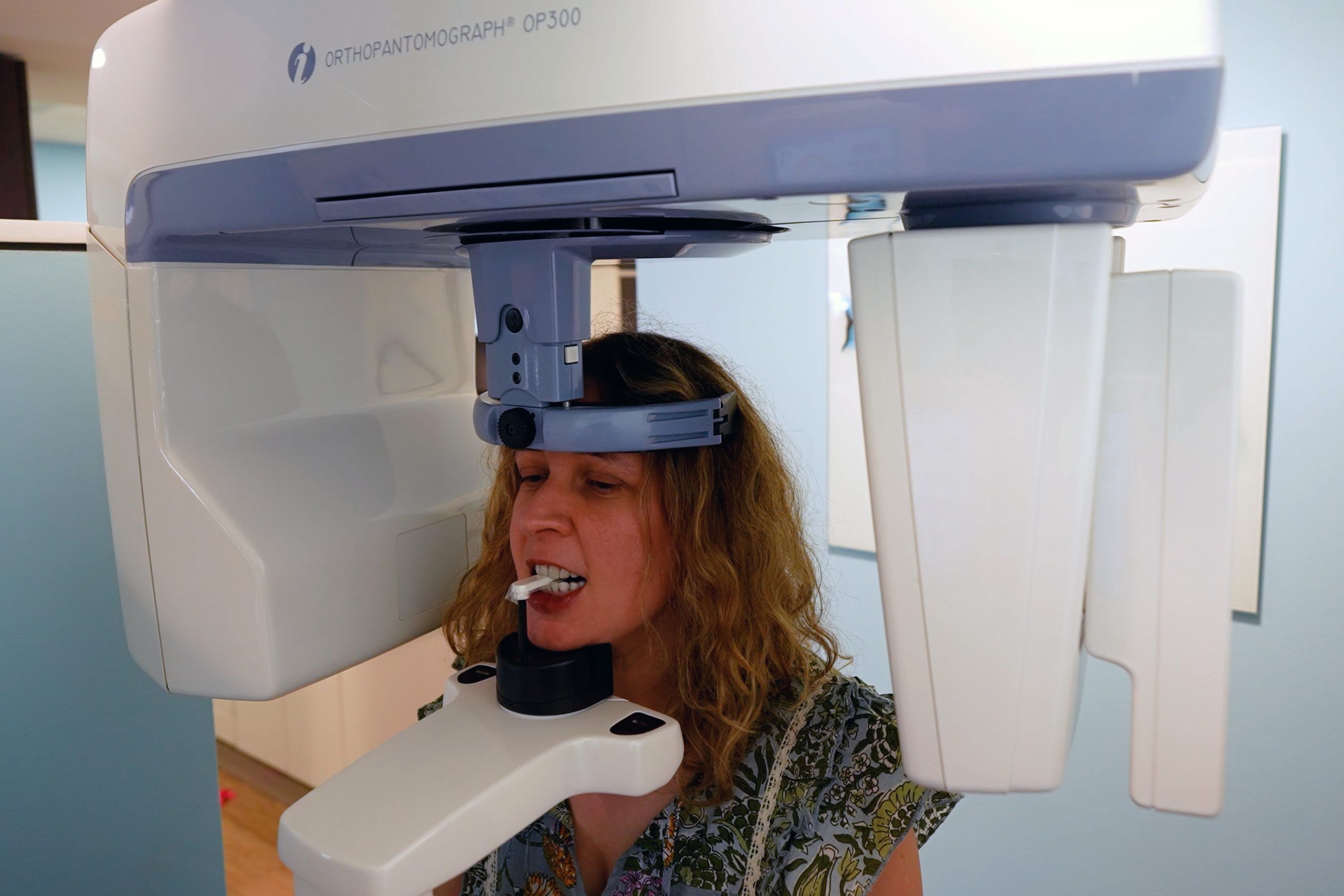
Imaging can add detail. 3D CBCT imaging gives a 3D view of your bone, roots, jaw joints, and airway that a standard dental X-ray can’t show. It captures your airway while you are awake and still, so it adds useful information but doesn’t diagnose sleep apnea on its own.
At SMILES ON 35th, every comprehensive exam includes an airway screening. Dr. Shahid asks about your sleep and energy, examines your mouth and airway, and takes 3D images when the exam calls for them. When the signs point to sleep apnea, she refers you to your own sleep physician or one from our network for a sleep study. She is a member of the American Academy of Dental Sleep Medicine, a professional society dedicated to dental sleep medicine, and has completed multiple courses in sleep apnea and oral appliance therapy. The tiredness you mention is taken seriously, and you leave knowing whether a sleep study makes sense for you.
Is an oral appliance an alternative to CPAP?
For many people with mild to moderate obstructive sleep apnea, and for people who can’t tolerate CPAP, yes. CPAP, or continuous positive airway pressure, is a bedside machine that gently pushes air through a mask to hold the airway open. It works well and remains the usual first choice for severe sleep apnea, but some people struggle with the mask, the hose, or the noise. A 2021 American Heart Association scientific statement recommends offering CPAP for severe sleep apnea, and says oral appliances can be considered for mild to moderate sleep apnea or for people who can’t use CPAP.
An oral appliance for sleep apnea, often called a mandibular advancement device, looks a little like a sports mouthguard. It fits over your upper and lower teeth and holds your lower jaw slightly forward while you sleep, which helps keep your airway open and can reduce snoring and breathing pauses. The joint clinical practice guideline from the American Academy of Sleep Medicine and the American Academy of Dental Sleep Medicine favors a custom, adjustable appliance made by a qualified dentist over an off-the-shelf device, with follow-up sleep testing by the sleep physician to confirm it is working.
That is how oral appliance therapy works at SMILES ON 35th. Your appliance is made from a 3D scan of your teeth, with no impression trays, and adjusted until it is comfortable and effective. Your sleep physician confirms the results, and we check fit and comfort at follow-up visits. Small, quiet, and easy to pack, an appliance is something many people find easier to live with every night.
Why restful sleep is worth protecting
Untreated sleep apnea is linked to high blood pressure, heart disease, and stroke. The National Heart, Lung, and Blood Institute notes that untreated sleep apnea increases the risk of stroke and heart attack. The American Heart Association statement reports that sleep apnea is found in as many as 40% to 80% of people with high blood pressure, heart failure, coronary artery disease, atrial fibrillation, or stroke. Those figures show how often the conditions occur together; they don’t mean that treating sleep apnea guarantees protection from heart disease.
Sleep is also where your energy, focus, and patience are rebuilt each night. If you already watch your blood pressure or your cholesterol, your airway belongs in the same picture: part of looking after your whole health for decades, starting with how you feel tomorrow morning.
If you wake up tired despite enough hours, snore loudly, or keep seeing poor sleep scores, ask about your airway. The answer may be reassuring, or it may be a sleep study that finally explains how you have been feeling. Either way, you will know where you stand.
A comprehensive exam at SMILES ON 35th includes an airway screening and time to talk through your sleep, your energy, and any tracker data you bring, with no judgment and no pressure. See what your first visit includes, and book a comprehensive exam when you’re ready to talk about your sleep.
More questions about sleep and your airway
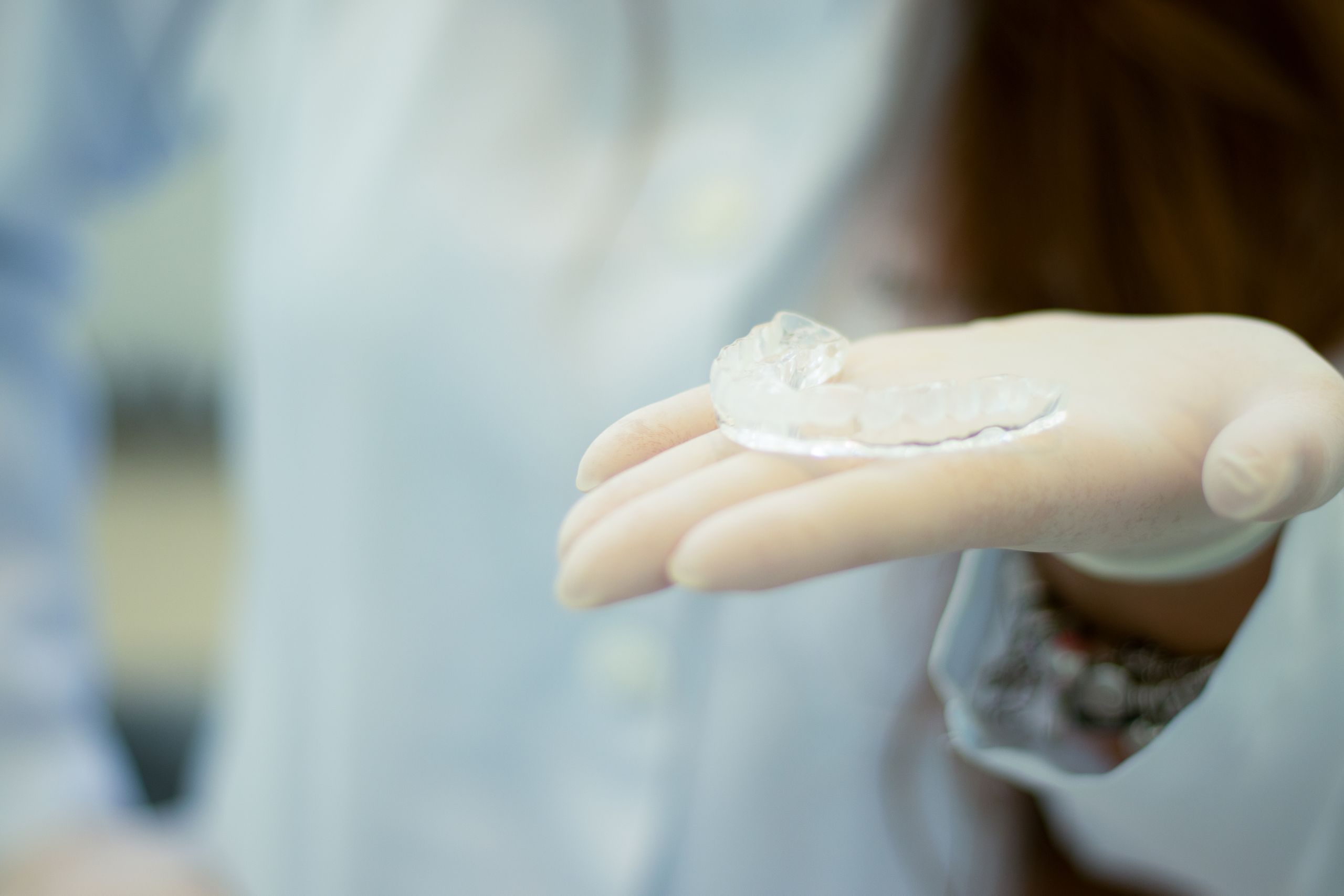
For diagnosed sleep apnea, a custom, adjustable oral appliance made by a qualified dentist is the recommended choice over an off-the-shelf mouthguard.
The joint guideline from the American Academy of Sleep Medicine and the American Academy of Dental Sleep Medicine favors custom appliances because they are fitted to your teeth and can be adjusted over time. Because loud snoring can be a sign of sleep apnea, it is worth knowing what is behind the sound before you treat it.
It can, which is why regular follow-up with your dentist matters while you wear an oral appliance for sleep apnea.
Holding the lower jaw forward night after night can cause tooth or jaw discomfort and gradual changes in how the teeth meet for some people. The American Academy of Sleep Medicine and the American Academy of Dental Sleep Medicine recommend dentist follow-up to watch for these effects and reduce them. At SMILES ON 35th, we check fit and comfort at follow-up visits and adjust your appliance as needed.
About the author
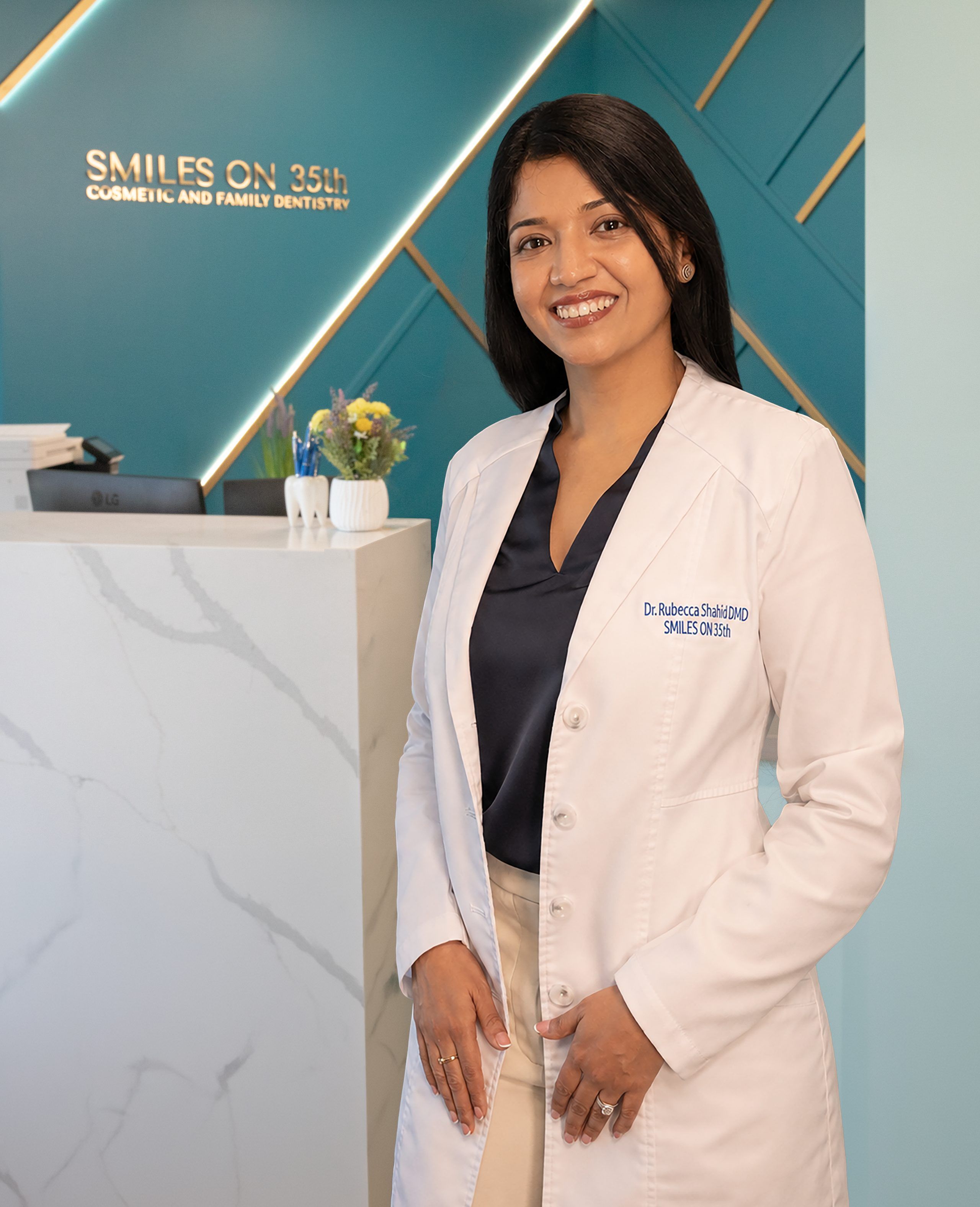
Dr. Rubecca Shahid, DMD
Dentist
Dr. Shahid practices longevity dentistry at SMILES ON 35th, her independent, woman-owned practice in Seattle where every plan starts with a diagnosis of your teeth, gums, bite, and airway. A graduate of the University of Illinois at Chicago College of Dentistry and Seattle's Kois Center, she holds a Mastership in biomimetic dentistry from the Alleman Center and completes nearly eight times the continuing education Washington requires each year.
She is a member of the ADA, AGD, AACD, AADSM, WSDA, and Seattle Study Club, and writes these articles so you can understand what is happening in your mouth and make informed decisions for your long-term health.
Meet Dr. Shahid