
What Is Longevity Dentistry?
Longevity dentistry plans care for your mouth, airway, and sleep around how long and how well you live. See how it differs and what a first visit covers.
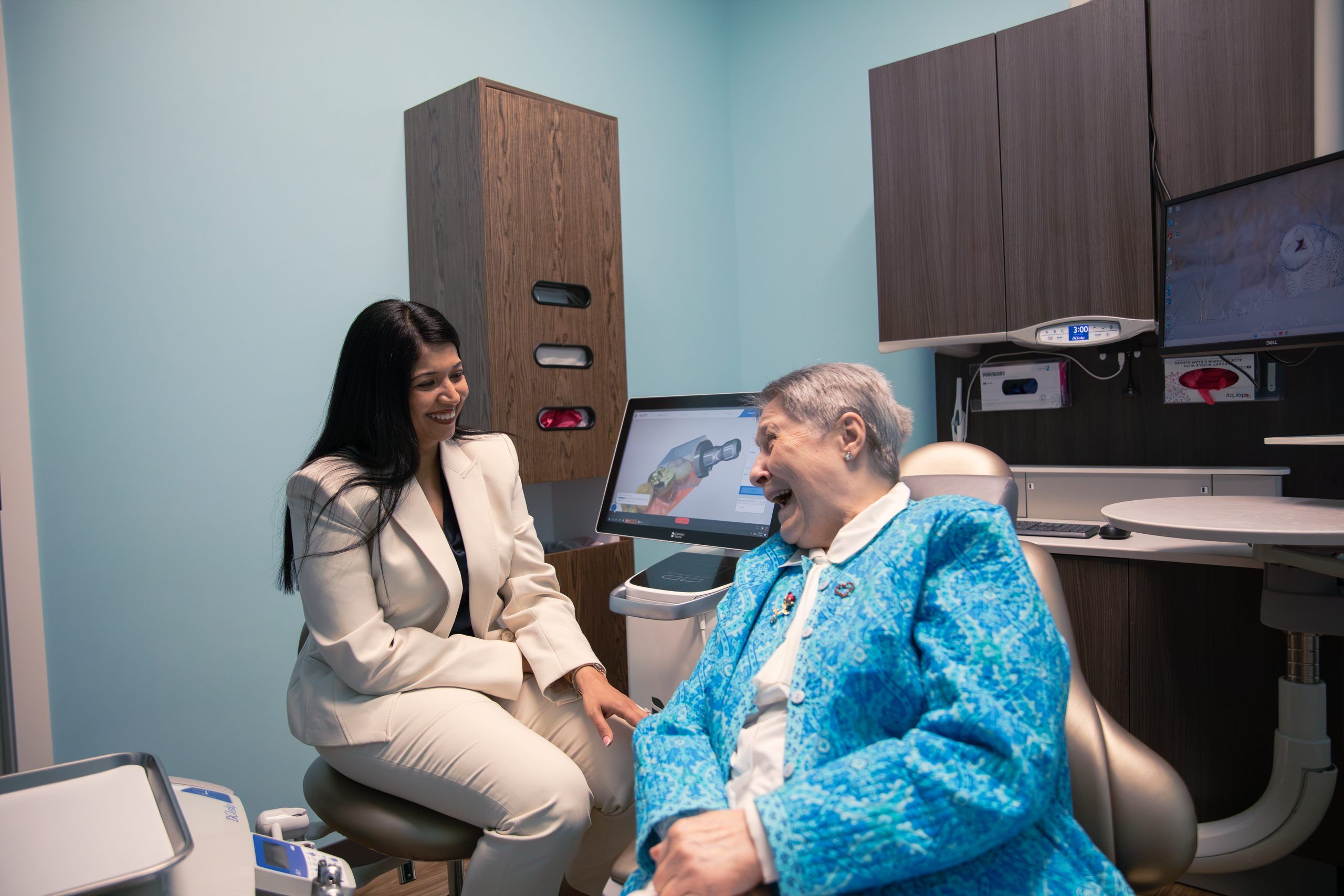
Longevity dentistry is dental care planned around how long and how well you live. It looks after your teeth, gums, bite, airway, and sleep as connected parts of your body. It aims to catch risk before it turns into damage, so you keep your natural teeth and protect the health your mouth is linked to.
If you know your ApoB and retest it every year, your dental care may be the one part of your health routine that still waits for something to hurt. Longevity dentistry brings that habit to your mouth: measure first, then act on what the results show. At SMILES ON 35th in Seattle, that is how Dr. Rubecca Shahid plans care for every patient.
How is longevity dentistry different from regular dentistry?
Most people know dentistry as a series of repairs. A tooth hurts or breaks, you book a visit, and the visit ends with a procedure. That reactive model starts at the tooth in front of the dentist and finishes when the tooth is fixed. It rarely asks why the tooth broke.
The repairs build on each other. Every new filling or crown removes more natural tooth, and when that work eventually fails, its replacement is usually larger. In a study of 1,337 decisions to replace existing fillings and crowns in back teeth, 70% of the recommendations increased the number of tooth surfaces restored. Each round leaves less of your own tooth to support the next repair, which makes the next crack or failure more likely. Followed long enough, the cycle ends with a lost tooth. Many people over 40 have already lived part of it.
The problem is not careless work; it is a model that stops its diagnosis at one tooth. Longevity dentistry starts with a different question: why is this happening? A cracked tooth may trace back to clenching at night. Decay that keeps returning may trace back to the bacteria in your saliva. Gums that bleed when you floss may be the visible edge of chronic inflammation. Repairing the damage without addressing what caused it leaves the cycle running.
That is the difference between procedure-driven and diagnosis-driven care. In practice, it changes three things:
- Where care starts: your whole mouth, your airway, and your health history, rather than the one tooth that hurts.
- How treatment is chosen: the most conservative option your diagnosis supports that will last.
- How far ahead it plans: the next 10, 20, and 30 years.
Longevity dentistry still uses familiar treatments: cleanings, fillings, crowns, clear aligners, implants, and veneers. What changes is the reasoning and the order behind each one.
How does oral health affect overall health?
Your mouth connects to the rest of your body through inflammation, breathing, and the ability to chew comfortably. The study of these links is called oral-systemic health. Most of the evidence shows associations, meaning the conditions tend to occur together. In most cases, research has not proven that one causes the other. That distinction matters: longevity dentistry does not mean a dentist can promise to add years to your life.
Gum inflammation and heart health
Periodontal inflammation, or gum disease, is chronic inflammation of the gums and the bone that holds your teeth in place. It is common and often quiet. About 4 in 10 US adults aged 30 and older have periodontitis, and the CDC notes that gum disease can become serious before you notice any symptoms. The CDC also notes that untreated periodontitis can make other chronic conditions, such as diabetes, worse.
The link people ask about most is the heart. In a 2012 scientific statement, the American Heart Association concluded that gum disease is associated with atherosclerotic vascular disease, the plaque buildup in artery walls that leads to many heart attacks and strokes, even after accounting for shared risk factors such as smoking, age, and diabetes. The same statement concluded that the evidence does not show gum disease causes heart disease, and that treating gum disease has not been shown to prevent it. Chronic inflammation is the most studied possible connection.
The established reason to treat gum disease is the damage it does in your mouth: it destroys gum and bone and costs teeth. If you already track hs-CRP and work to keep inflammation low, your gums belong in the same picture.
Airway, sleep, and energy
Your airway sits just behind your tongue and jaw, and its shape affects how well you breathe while you sleep. Obstructive sleep apnea is repeated narrowing or blockage of the airway during sleep. It lowers oxygen levels and breaks sleep into fragments, which you feel the next day as fatigue. According to a 2021 American Heart Association scientific statement, about 34% of middle-aged men and 17% of middle-aged women meet the criteria for obstructive sleep apnea. It is found in as many as 40% to 80% of people with high blood pressure, heart failure, coronary artery disease, atrial fibrillation, or a history of stroke.
If your sleep tracker shows oxygen dips, or you wake tired after a full night in bed, your airway may be part of the reason. Grinding and worn teeth can point the same way. A sleep physician diagnoses sleep apnea. A longevity dentist screens your airway during the exam, refers you when the signs call for it, and can treat mild to moderate obstructive sleep apnea with an oral sleep appliance, working with your sleep physician. An oral appliance is a custom mouth device worn during sleep to help keep the airway open. Functional dentistry is where that care happens, along with treatment for grinding and jaw pain.
Bite and everyday comfort
A stable bite lets you chew and eat comfortably, decade after decade, without thinking about your teeth. When teeth meet unevenly, or when you clench and grind, the force wears enamel, cracks teeth and old fillings, and strains the jaw joints and muscles. Clenching through heavy lifts adds to that load over the years. Protecting the bite protects everything built on it, from your natural teeth to any crown or implant you may need later.
What does a longevity dentist measure?
A longevity dentist measures your risk before recommending treatment. At SMILES ON 35th, care starts with a complete exam of your teeth, gums, bite, jaw joints, and airway, a review of your medical and dental history, and a formal risk assessment.
That risk assessment comes from the Kois Center in Seattle, an advanced program in comprehensive diagnosis, risk assessment, function, and treatment planning. Dr. Shahid is one of about 1,200 dentists worldwide to complete its full nine-course curriculum. The Kois risk assessment looks at four areas:
- Periodontal risk: how likely your gums and the bone beneath them are to break down.
- Biomechanical risk: how likely your teeth and existing dental work are to crack, decay, or fail.
- Functional risk: whether your bite and jaw are putting damaging force on your teeth and joints.
- Dentofacial risk: how your teeth, gums, lips, and face work together in your smile, which matters before any cosmetic change.
Each test is chosen to answer one of those questions. Digital X-rays and a 3D scan of your teeth show cracks, wear, and how your teeth meet, on screen. When the exam calls for more detail, 3D CBCT imaging shows the bone, roots, nerves, jaw joints, and airway that a standard X-ray cannot, and T-Scan digital bite analysis measures the timing and force of every contact as your teeth come together. Salivary and blood testing identify the bacteria, inflammation, and nutritional gaps behind gum disease and decay, so treatment can target what the tests find. For a closer look, read what a saliva test reveals and how the results shape treatment.
Measuring also changes the conversation about treatment. When Dr. Shahid recommends a procedure, she shows you the finding behind it: the crack on the scan, the bite map, the test result. You can see why each step is there, so the plan reads as reasoning you can check rather than a sales pitch. Our independent, woman-owned practice has no corporate production quotas.
Why does the order of care matter?
Longevity dentistry follows one order of care because each step protects the next. A crown placed on inflamed gums, or veneers on a bite that grinds, will not last as long as it should. Your diagnosis decides which steps you need, and most people need some rather than all of them:
- Establish health. Bring gum disease, inflammation, decay, and infection under control before any elective or complex work.
- Preserve natural tooth. Remove only what is damaged and bond to the healthy tooth that remains. Biomimetic dentistry mimics how a natural tooth handles stress, with the goal of preventing fractures and reducing the chance of a future root canal.
- Stabilize function. Balance the bite, protect against grinding, and address the jaw joints and airway, so the forces that damaged teeth before stop doing so.
- Restore what is lost. Replace failing or missing teeth with crowns, implants, or full-mouth reconstruction, based on what your diagnosis shows you need.
- Enhance the smile. Wanting a smile you enjoy is a valid reason to seek care. Whitening, veneers, and other cosmetic care come last, built on healthy gums and a stable bite so the result lasts.
Once the plan is complete, maintenance takes over. Cleanings are scheduled by your risk rather than a fixed calendar, and regular reassessment catches changes early, so your plan adjusts as you age.
What happens at a first visit?
A first visit with a longevity dentist is a comprehensive exam and risk assessment, and at SMILES ON 35th it is unhurried by design. It begins with a conversation about your health history, your past dental work, and what you want from your care. Dr. Shahid then examines your teeth, gums, bite, jaw joints, and airway, with the X-rays and images she needs. Most new patients also have a cleaning when there are no signs of gum disease; if your gums need more care, she explains that treatment first.
Before you leave, she walks you through what she found, on screen. You go home with a customized plan and the reasoning behind each step.
It doesn’t matter whether it has been six months or ten years since your last dental visit. Long gaps and unfinished treatment plans are fine to talk about, and oral sedation is available if dental visits make you anxious. Every treatment room also offers a complimentary comfort menu, including weighted blankets, heated neck wraps, and gold under-eye masks.
Longevity dentistry measures first and treats in an order that protects what you have. It is dentistry designed for the next 20 years, not just the next appointment. A comprehensive exam gives you a baseline: where your own mouth stands today. See what your first visit includes, then book when you’re ready.
Questions about longevity dentistry

Not exactly. Both take a whole-body view, but longevity dentistry describes how care is planned, while holistic dentistry usually describes the materials and methods used.
Longevity dentistry measures your risk, treats in a set order, and plans for decades ahead. Holistic and biological dentistry focuses on choices such as biocompatible, metal-free materials, including ceramic implants. At SMILES ON 35th, those choices sit inside a longevity plan rather than replacing it.
A mouth that feels fine is the best time for a risk assessment, because gum disease and early decay often cause no pain until they have done real damage.
A crack or an uneven bite can also progress quietly for years. A baseline exam shows where you stand now and gives every later visit something to measure against.
The cost depends on what your exam finds, because your plan is built from your own diagnosis rather than a standard package.
Pricing at SMILES ON 35th is transparent, and Dr. Rubecca Shahid explains why each step is in your plan before you decide on it. Financing and an in-house membership plan are available, and our team helps you make the most of any dental insurance benefits you have.


About the author
Dr. Rubecca Shahid, DMD
Dentist
Dr. Shahid practices longevity dentistry at SMILES ON 35th, her independent, woman-owned practice in Seattle where every plan starts with a diagnosis of your teeth, gums, bite, and airway. A graduate of the University of Illinois at Chicago College of Dentistry and Seattle's Kois Center, she holds a Mastership in biomimetic dentistry from the Alleman Center and completes nearly eight times the continuing education Washington requires each year.
She is a member of the ADA, AGD, AACD, AADSM, WSDA, and Seattle Study Club, and writes these articles so you can understand what is happening in your mouth and make informed decisions for your long-term health.
Meet Dr. Shahid